

About the Festival
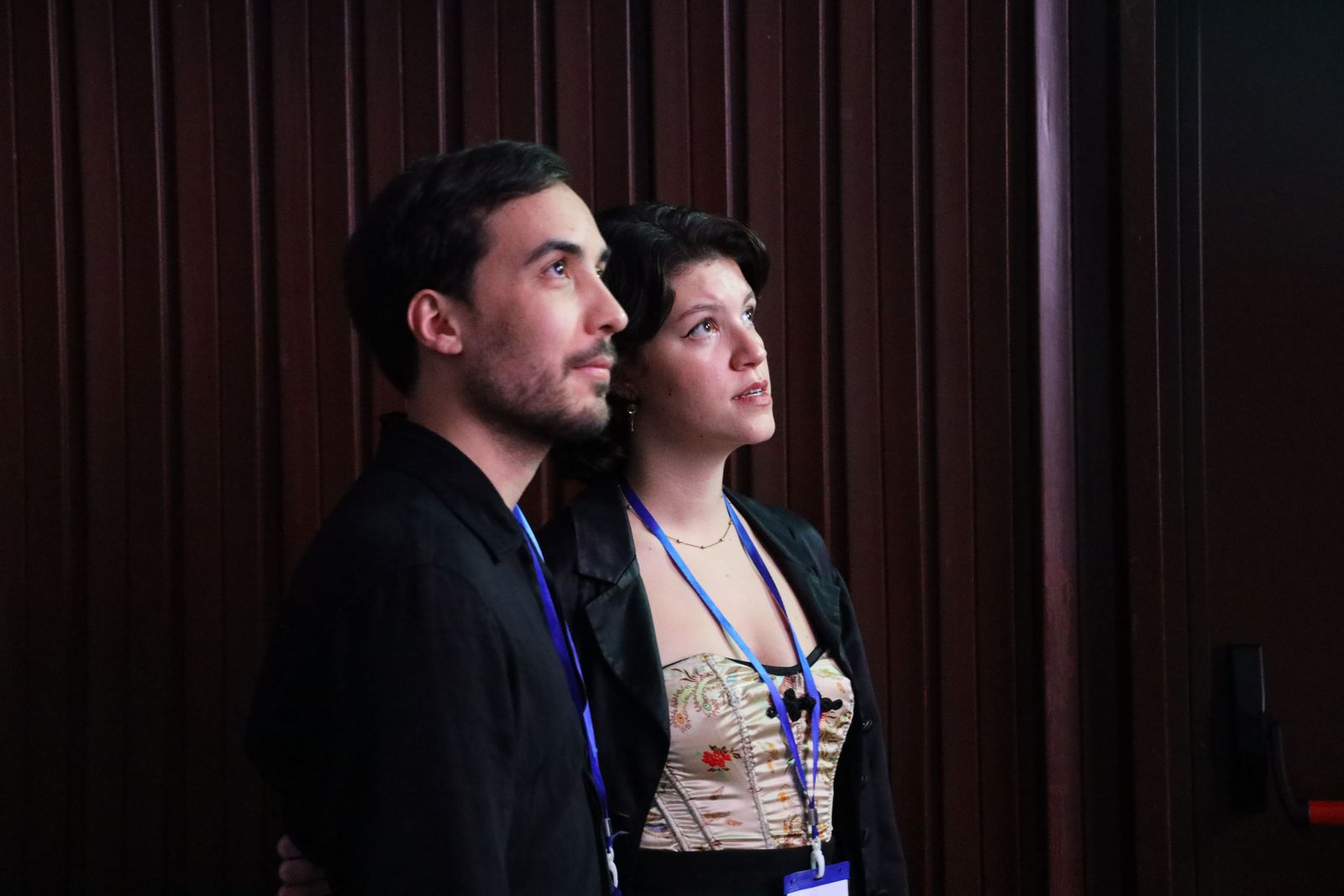
Triste para Sempre is an emerging film festival dedicated to the complexity of sadness, run by the Triste Para Sempre Cultural Association.
The festival was founded in 2019 by António Simão and Carolina Serranito, friends who met in Lisbon volunteering at film festivals. Over time, they noticed this thematic gap in the city’s cultural programming and decided to commit themselves entirely to it.

In 2019, with the support of Com Calma - Espaço Cultural and Palácio Baldaya, the festival premiered in Benfica with a short two-day edition.
Since then, Triste Para Sempre has travelled across cinemas in Lisbon — from Fábrica do Braço de Prata to Fórum Lisboa and Cinema Fernando Lopes, with occasional screenings at Casa do Comum. Beyond Lisbon, the festival has been hosted in Évora and Leiria, and aims to keep expanding its audience, its film network and its partner base.
Starting from the need to normalise less-than-happy endings, Triste seeks out Portuguese and international film productions — independent and agency-represented — across film schools, production companies, distributors and other festivals.
With room for every genre and runtime, bringing sadness onto the big screen becomes a collective event where the exploration of primary and complex emotions is amplified by the chance to share them with a safe audience.
The festival is committed to an intimate atmosphere with thematically curated sessions, moderated by team members and enriched by the presence of filmmakers or producers.
Through cinema, it has been possible to attend to many shades of sadness and melancholy — from darker passages through stories of abandonment, fear, exclusion and isolation, whose origins and trajectories have been accompanied by the filmmakers, producers and even activists specialised in these subjects.
But also a lighter, more productive sadness: the pains of growing up, the anxiety of responsibility, the encounter with the unknown and the reunion with lost roots.
We believe that sadness in all its dimensions deserves to be cared for and investigated — both as artistic material and a powerful fuel for filmmaking, and as a social matter that should be woven into culture and education with dignity and without prejudice.